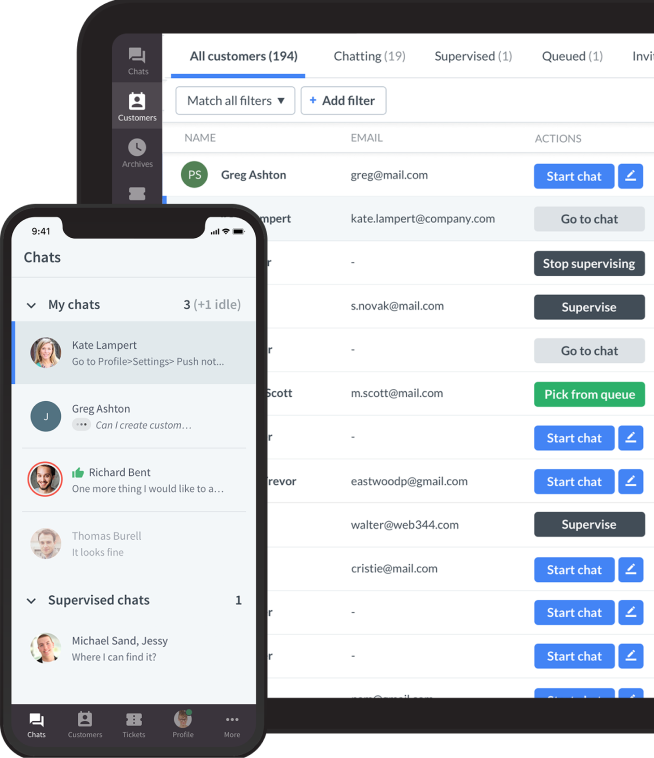


Live chat has become one of the fastest ways for Shopify stores to turn browsing into buying. Customers expect quick answers when comparing products or hesitating at checkout, and even a short delay can prompt them to look elsewhere.
That’s why the right live chat app does more than display a chat bubble. It creates a smoother shopping experience, provides your team with the context they need to reply confidently, and helps your store maintain momentum during the moments that matter most.
In this article, you’ll learn:
- What makes a Shopify live chat app effective in 2025
- Which live chat features matter most for ecommerce support
- How top Shopify live chat apps compare, including popular options like Gorgias, Zendesk, Tidio, and Shopify Inbox
- What to consider before choosing a tool for your store
Let’s get started and find the live chat app that helps your Shopify app store sell with confidence.
Essential features of a Shopify live chat app
Choosing the right Shopify chat app starts with understanding which features genuinely improve the customer experience and your team’s workflow.
Store owners need tools that handle product questions, guide potential customers, and manage customer queries during peak traffic. The best apps do more than open a chat window on a Shopify online store; they help teams stay organized, respond quickly, and improve customer service in the moments that matter.
To support these conversations, live chat platforms often include advanced features such as visitor tracking, personalized greetings, customer data insights, and pre-chat forms that help agents understand the context before responding.
Many also offer offline messaging to ensure shoppers get clear follow-up even when agents are unavailable. Integrations with channels such as Facebook Messenger create a seamless communication flow, especially for stores that manage multiple stores or support customers across several touchpoints.
Before comparing platforms, it's helpful to know which core capabilities truly drive growth for ecommerce and shape how effectively your team supports customers.
Deep Shopify integration
A strong live chat app connects directly with your Shopify data, enabling your team to view customer details, order history, and product information without needing to switch tabs. This context enables conversations to be faster and more accurate.
Some tools even allow agents to process refunds or adjust orders directly from within the chat window, which keeps support smooth during busy periods. After installing a live chat app, users can customize the chat widget's appearance and settings to match their online store's branding, ensuring a seamless integration with the storefront.
AI support for repetitive questions
AI has become an important part of ecommerce support. Chatbots can answer common questions, guide customers through simple tasks, and share product recommendations. When the AI is trained on your store’s own knowledge, the answers feel more personal and relevant. This reduces the workload and gives human agents more time to address complex issues. Additionally, canned responses are pre-drafted automated replies to frequently asked questions, helping to reduce response times in live chat.
Customizable chat widgets
A chat widget that matches your brand helps live chat feel like a natural part of the shopping experience. Custom colors, wording, and placement keep your storefront consistent. Personalized greetings or page-specific prompts also create smoother conversations, especially when shoppers need guidance during product comparison or checkout.
Real-time visitor insights
Seeing what visitors are doing in real time gives your team a better understanding of when someone might need help. Page paths, time spent on certain products, or repeat visits can signal good moments to reach out. These insights also support proactive chat triggers that initiate conversations when customers exhibit hesitation. Live chat tools often collect visitor data, enabling agents to better understand customer needs and provide a more personalized experience.
A unified inbox for all support channels
Most Shopify stores handle more than just chat. Email, Messenger, social media messages, and contact forms often occur simultaneously. A unified inbox keeps these conversations in one place, so your team can respond quickly and maintain full context.
Tools like Re: amaze and Zendesk centralize customer interactions from various channels into a single inbox, ensuring seamless communication. When the inbox includes ticketing, tagging, and automation rules, support stays organized even during high-volume days. Queuing features in the best live chat apps route customer inquiries to the appropriate department or agent based on keywords in the conversation.
Analytics and reporting
To improve support over time, stores need visibility into trends, common questions, and chat performance. Analytics reveal how quickly your team responds, where customers encounter difficulties, and which topics appear most frequently in chats.
Users can track key metrics, such as resolution rate and user satisfaction, to evaluate the performance of their live chat app. These insights help refine product descriptions, align support priorities, and adjust automation without guesswork.
Simple setup and reliable performance
The best live chat app should install easily and work consistently, even during peak sales periods. Shoppers expect instant communication, and delays or errors can disrupt the buying journey. Reliable tools keep both your team and customers moving without interruptions.
Benefits of using live chat in Shopify stores
Live chat gives Shopify app stores an immediate way to support customers during the exact moment they’re deciding what to buy. Most shoppers have small but meaningful questions before they commit: Will this arrive in time? Does this fit true to size? Can I return it easily? When they can ask and get an answer instantly, the buying journey feels smooth instead of stressful. That shift in experience is one of the biggest reasons live chat consistently improves conversion rates for ecommerce brands.
It also reduces cart abandonment. Many customers leave because something creates friction at checkout, unclear shipping timelines, issues with discount codes, or uncertainty about a product variant. Live chat helps remove those blockers before a shopper walks away. Even a short, friendly exchange can be enough to recover a sale that would have been lost.
Shoppers who get real-time help are also more satisfied overall. Live chat creates a sense of presence that email and contact forms can’t match. It feels human, even when AI handles the first message. Customers appreciate knowing a store is available, listening, and ready to help.
Live chat can provide immediate support, contributing to a 73% higher customer satisfaction rate. That feeling often leads to repeat purchases, higher lifetime value, and increasing customer loyalty.
Live chat also opens the door to proactive support. Many Shopify stores utilize behavioral triggers to initiate conversations at the most crucial moments, such as greeting a returning customer, reaching out when a shopper compares similar items, or offering support when someone hesitates over a high-value product. These small nudges can influence decisions, guide buyers as they explore options, and create a more personalized shopping journey.
There’s another advantage: better customer insights. Every conversation reveals what shoppers care about, what they struggle with, and what information they can’t find. Over time, these patterns help store owners refine their product pages, adjust inventory strategies, and improve policies such as shipping and returns. Teams gain a clearer picture of buyer intent and obstacles, making both marketing and support more effective.
8 Best Shopify live chat apps in 2026
Shopify merchants exploring Shopify live chat tools will find plenty of options in the Shopify App Store, but only a select group consistently stands out for reliability, speed, and ecommerce-focused workflows.
The best solutions help stores improve customer support across the online store, connect smoothly with channels like Facebook Messenger, and offer helpful live chat features such as pre-chat forms, proactive greetings, and customer context.
While the best Shopify chat apps all support real-time chat support, they differ in automation depth, Shopify integration, and how well they scale as your business grows. LiveChat, Tawk.to, and Tidio are among the strongest other live chat apps for merchants comparing tools, especially when deciding which Shopify chat app fits their workflow.
Here’s a closer look at the leading choices, starting with LiveChat.
LiveChat
LiveChat is designed for Shopify stores that seek a professional, customer-friendly chat experience, supported by a clean interface, powerful routing, and robust ecommerce integrations. The platform seamlessly integrates live messaging with ticketing, chat history, and customer details, enabling agents to respond quickly and confidently.
Store owners can customize the live chat widget to match their brand, set up proactive greetings based on browsing behavior, and use built-in reporting to track satisfaction, response times, and high-intent conversations. LiveChat’s Shopify app store integration enables agents to view order details and visitor information directly within the chat, allowing them to guide shoppers to the right products or resolve issues without switching tools.
For growing Shopify brands, the combination of real-time chat, automation add-ons, and a unified communication hub makes LiveChat a dependable choice for delivering fast, helpful support.
Shopify Inbox
Shopify Inbox is ideal for smaller online stores or merchants just getting started with support. It installs instantly, syncs with Shopify by default, and keeps setup simple.
Shopify Inbox is a free live chat tool that is deeply integrated with store data, making it a practical choice for entry-level users. Additionally, Shopify offers a native live chat feature called Shopify Chat, which is a free plan for all users, providing another accessible option for merchants.
MIT AI Chatbot & Sales Bot
MIT AI Chatbot & Sales Bot is ideal for store owners looking to hand over their routine FAQs and order-related queries to a chatbot as they prioritize high-value inquiries that need immediate attention. Whenever a query needs human support, the bot instantly hands off the conversation to a human agent on WhatsApp or other platforms.
Leveraging the store’s data, the bot intelligently suggests products by analyzing real-time user intent. The app is free to install with direct configurations within the Shopify admin panel, making AI accessible to merchants without any technical hurdles.
Tidio
Tidio combines a clean chat interface with a visual chatbot builder that helps teams automate simple flows without technical skills. Known for its user-friendly interface, Tidio is an excellent choice for stores that want to offer quick responses, guide customers through FAQs, or create lightweight automations without managing a full helpdesk. It is also renowned for its ticketing system and AI chatbot, which can resolve up to 70% of customer inquiries, making it a powerful tool for efficient support.
Gorgias
Gorgias is designed for Shopify app store merchants who manage high conversion volumes closely tied to order activity. Its deep Shopify integration lets agents view orders, apply discounts, and issue refunds directly from the chat window. This workflow reduces the need for switching between tools and speeds up response times for busy support teams.
Gorgias is an AI-powered customer support platform built primarily for ecommerce businesses using Shopify, making it a robust choice for scaling operations. Richpanel is a powerful AI customer service platform built to scale support while maintaining personalization.
Re:amaze
Re:Amaze brings multiple communication channels into a single inbox, including chat, email, SMS, and social platforms. Its automation tools, internal notes, and status pages help teams coordinate responses and maintain consistent communication across every channel customers use.
This tool integrates with many other apps for ecommerce platforms and becomes a command center for customer-oriented activities. Chatra offers real-time customer engagement features, including visitor segmentation tools.
Zendesk
Zendesk is recognized for its sophisticated workflow. It’s well-suited for larger teams that rely on advanced routing, detailed reporting, or structured ticket management. While it can be more complex to configure, it provides stability and customization at scale. Zendesk is a customer support software built for many industries and is highly customizable.
Tawk.to
Tawk.to offers a free plan, making it accessible for early-stage stores or merchants experimenting with live chat software for the first time. It covers the basics well, though it lacks the automation, analytics, and e-commerce-specific integrations found in premium tools.
ProProfs Chat also offers a Forever Free plan, which includes all premium features, making it an ideal option for small teams and merchants. Smartsupp enables versatile customer communication through its customizable live chat widget, contact form, and live chat mobile app.
| Tool | Best for | Key strengths | Limitations |
|---|---|---|---|
| LiveChat | Growing Shopify stores that want a polished live chat with strong ecommerce workflows | Customizable widget, proactive greetings, solid reporting, fast response tools, and clean Shopify integration | Automation depends on add-ons or third-party tools |
| Shopify Inbox | New or small stores | Free plan, easy setup, native Shopify integration | Limited automation and reporting |
| MIT AI Chatbot & Sales Bot | Merchants on a budget looking to leverage AI | Complete no-code solutions with proper customization and training options | Limited AI reply quota on free plan |
| Tidio | Stores want simple bots | Visual builder, user-friendly interface | Not ideal for heavy ticket workflows |
| Gorgias | High-volume ecommerce teams | Deep Shopify order actions, macros | It can get expensive as volume increases |
| Re:amaze | Multichannel support teams | Unified inbox, automation, status pages | Interface can feel dense for small teams |
| Zendesk | Large or complex support operations | Advanced routing, reporting, and scalability | More complex setup and configuration |
| Tawk.to | Starter stores on a budget | Free plan, simple live chat | Limited automation, fewer ecommerce-specific features |
Integrating live chat with Shopify
Integrating live chat with Shopify should feel simple from the start. Most apps install directly through the Shopify App Store, so adding one to your storefront usually takes only a few minutes. To add live chat to a Shopify store, users can search for the best live chat app in the Shopify App Store and click the 'Add app' button.
Once connected, the live chat widget appears instantly, and your support team can begin responding to customers right away. The setup step is rarely the challenge; what truly shapes the customer experience is how you customize and refine the tool after it has been installed.
A well-configured chat widget seamlessly integrates with your brand, rather than feeling like an add-on. Adjusting colors, placement, and greeting messages helps create a familiar environment for shoppers. Many stores personalize greetings based on the visitor's location.
A message on a product page may offer guidance on sizing, while a prompt on the checkout page may address questions about shipping or discount codes. These small touches make the experience feel thoughtful and help customers initiate conversations with confidence.
Live chat becomes even more useful when it connects with the other tools you rely on. Shopify stores often utilize a combination of CRM systems, email platforms, shipping tools, and marketing applications. When your chat solution integrates cleanly with them, agents can access order history, customer profiles, or product details without leaving the chat window. This reduces switching, speeds up responses, and ensures support accuracy during busy periods.
As you set up your live chat workflow, a few practices can make a noticeable difference:
• Create clear response expectations so customers know when they’ll hear back
• Use proactive messages only on high-intent pages, not the entire store
• Review transcripts to understand common questions and update your product pages accordingly
• Pair automation with human support so simple questions are handled immediately while complex ones get personal attention
Live chat also benefits from ongoing adjustments. Once conversations start flowing, patterns appear: the questions shoppers ask most often, the pages where they hesitate, and the moments when they’re most likely to need help. These insights help you refine your setup over time. Many Shopify stores revisit their triggers, greetings, and automated responses as they gain a deeper understanding of customer behavior.
To keep your workflow smooth, it helps to align live chat with the way your team already works. Stores that offer support across multiple channels, such as chat, email, Messenger, or contact forms, often prefer tools that consolidate everything into a single inbox. This makes it easier to track conversations, maintain continuity, and avoid missed messages. It also ensures your support remains consistent, regardless of where a customer reaches out.
A thoughtful integration turns live chat into more than just a communication channel. It becomes part of how shoppers explore your products, ask questions, and make confident decisions. When setup, customization, and ongoing improvements work together, live chat support contributes directly to higher satisfaction, fewer abandoned carts, and stronger customer relationships.
How does live chat drive higher customer satisfaction?
Customer satisfaction on Shopify often hinges on what happens in the moments leading up to a purchase. Shoppers browse with intent, but uncertainty can quickly interrupt their decision-making process. Live chat software fills that gap by providing customers with a direct line to the store at the exact moment they need clarification. Instead of searching through policies or waiting for an email reply, they receive human (or AI-assisted) guidance in real-time.
What makes this so effective is the shift in tone. A short exchange can turn an anonymous visitor into someone who feels acknowledged and supported. When a customer inquires about shipping times or product fit and receives a prompt, confident response, the experience becomes more personal. That sense of connection removes friction and makes the store feel more trustworthy.
Best live chat apps also help customers feel in control of their shopping experience. They can choose when to start a conversation, how to ask questions, and how quickly they want to move forward. This autonomy is especially important in ecommerce, where one-size-fits-all information rarely satisfies everyone. With live chat available, the store adapts to the customer, not the other way around.
There’s another factor behind rising satisfaction scores: immediacy. The difference between waiting even 20 minutes for a response and receiving one instantly can significantly impact how a shopper perceives the entire brand. When stores answer quickly, customers interpret it as a sign of care, reliability, and operational maturity, qualities that directly influence repeat purchasing.
As conversations accumulate, live chat support builds a valuable feedback loop. Teams notice patterns in what customers ask, how they describe pain points, and where they hesitate. Improving those areas has a direct, measurable impact on satisfaction. Better product pages, clearer sizing charts, and stronger policy explanations all originate from live chat insights.
Live chat service also encourages positive sentiment through small touches that are easy to overlook. Customers appreciate it when an agent remembers something from an earlier part of the conversation or follows up with a helpful link. Even automated messages can feel warm when they anticipate a need instead of pushing information at random. These micro-moments significantly contribute to how customers perceive the experience.
Some stores take this a step further by using live chat software to guide shoppers through their decisions, rather than simply answering questions. A bit of reassurance about material quality, a reminder of a current promotion, or help comparing two similar items can make the customer feel supported rather than sold to.
Choose the right live chat app for your Shopify store
Finding the best live chat app isn’t about picking the tool with the longest feature list. It’s about choosing the one that fits how your store sells, how your team works, and how your customers prefer to communicate. Shopify merchants differ widely in their support needs. Some handle a few conversations a day, while others manage hundreds across multiple channels. The best choice depends on where you fall on that spectrum.
A helpful starting point is understanding your store’s rhythm. Stores with fast-moving inventory or high product variation often benefit from tools that bring customer data, order details, and product information into the chat window. This keeps responses accurate and reduces the back-and-forth that slows down the conversation.
Stores with long consideration cycles, such as those in the beauty, apparel, or specialty goods sectors, may prioritize personalization features, proactive messages, or AI assistance that guides customers through common questions.
Budget plays a role too, but not always in predictable ways. A free tool may be appealing at first, but many brands eventually outgrow basic chat and require more advanced automation, streamlined workflows, or stronger Shopify integrations. The most cost-effective solution is usually the one that reduces repetitive work and keeps the support team focused on the moments that require a human touch.
To facilitate the comparison, it is helpful to think in terms of priorities rather than features.
Consider which of these statements feels most true for your store:
- “We need to respond faster without hiring more people.”
- “We want to centralize conversations from multiple channels."
- “We want AI to handle common questions accurately.”
- “We need direct access to Shopify order actions inside the chat.
- “We want a simple starting point with minimal setup.”
Each direction leads to a different category of tool. High-volume support teams often opt for platforms with unified inboxes and automation capabilities. Stores that value flexibility often seek live chat apps that also incorporate email, AI workflows, or ticketing systems. Smaller brands may prefer lighter tools that stay out of the way until needed.
It’s also worth considering the experience beyond live chat. Some platforms become long-term operational hubs, shaping how teams collaborate, how tickets move through queues, and how insights are shared across departments. Others remain focused on quick conversations and fast installation. Neither approach is inherently better; what matters is how well it matches your pace of growth.
Before committing to any tool, take advantage of trial periods to ensure it meets your needs. Test how it feels to handle real customer conversations. Explore how quickly your team adapts, whether the automation behaves as expected, and how naturally the chat widget blends with your storefront. These details often reveal the true value of the app more clearly than a feature checklist.
The right live chat app should make your support feel lighter, your customers feel understood, and your store easier to run. When a tool aligns with your workflow instead of forcing you to adjust to it, you’ve found a match that will scale with your business.
Enhance customer experience with real-time support
Try LiveChat today and connect with your customers like never before!
Trusted by 36,000+ companies

Your Shopify live chat support app awaits now
Live chat has become one of the most effective ways for Shopify stores to support customers, reduce friction, and increase conversions. When shoppers pause to compare products, check shipping details, or sort out an issue at checkout, real-time assistance often determines whether they complete their order. The tools in this list all help stores handle these moments with speed and clarity, but each one brings its own strengths.
Some merchants want a polished, intuitive chat experience like LiveChat. Others choose workflow-heavy platforms, such as Gorgias or Zendesk, to manage high volumes of inquiries. Stores experimenting with automation may lean toward Tidio or Smartsupp, while new or budget-focused teams often start with Tawk.to. Re:amaze is a strong fit for brands that want every channel in one place.
There is no single best shopify live chat app; the right choice depends on your support style, the complexity of your workflows, and the pace of your growth. What matters most is selecting a tool that seamlessly integrates into your daily operations, helps shoppers find answers quickly, and supports the type of customer experience your brand aims to deliver.
If you're ready to offer fast, friendly, and reliable customer support on Shopify, explore LiveChat and see how it can elevate conversations across your store.
FAQ
Is live chat worth adding to a Shopify store?
Yes. Stores see higher conversions, fewer abandoned carts, and happier customers when they offer instant support.
What is the easiest live chat app for beginners?
Shopify Inbox is the simplest, though tools like LiveChat and Tidio offer more automation and scalability.
Do live chat apps on Shopify include a ticketing system?
Many tools do. Platforms like LiveChat, Gorgias, Zendesk, and Re:amaze offer built-in ticketing or unified inboxes that turn conversations into trackable tickets.
Can live chat improve customer interactions beyond answering questions?
Absolutely. Live chat can guide shoppers through product decisions, highlight relevant recommendations, share policies at the right time, and remove friction at checkout.
Does Shopify support multiple live chat apps at once?
You can install several, but only one live chat widget should run on the storefront to avoid conflicts. Many merchants keep others installed for backend workflows.